How AI Is Changing Claims Adjusting and Insurance Jobs in 2026
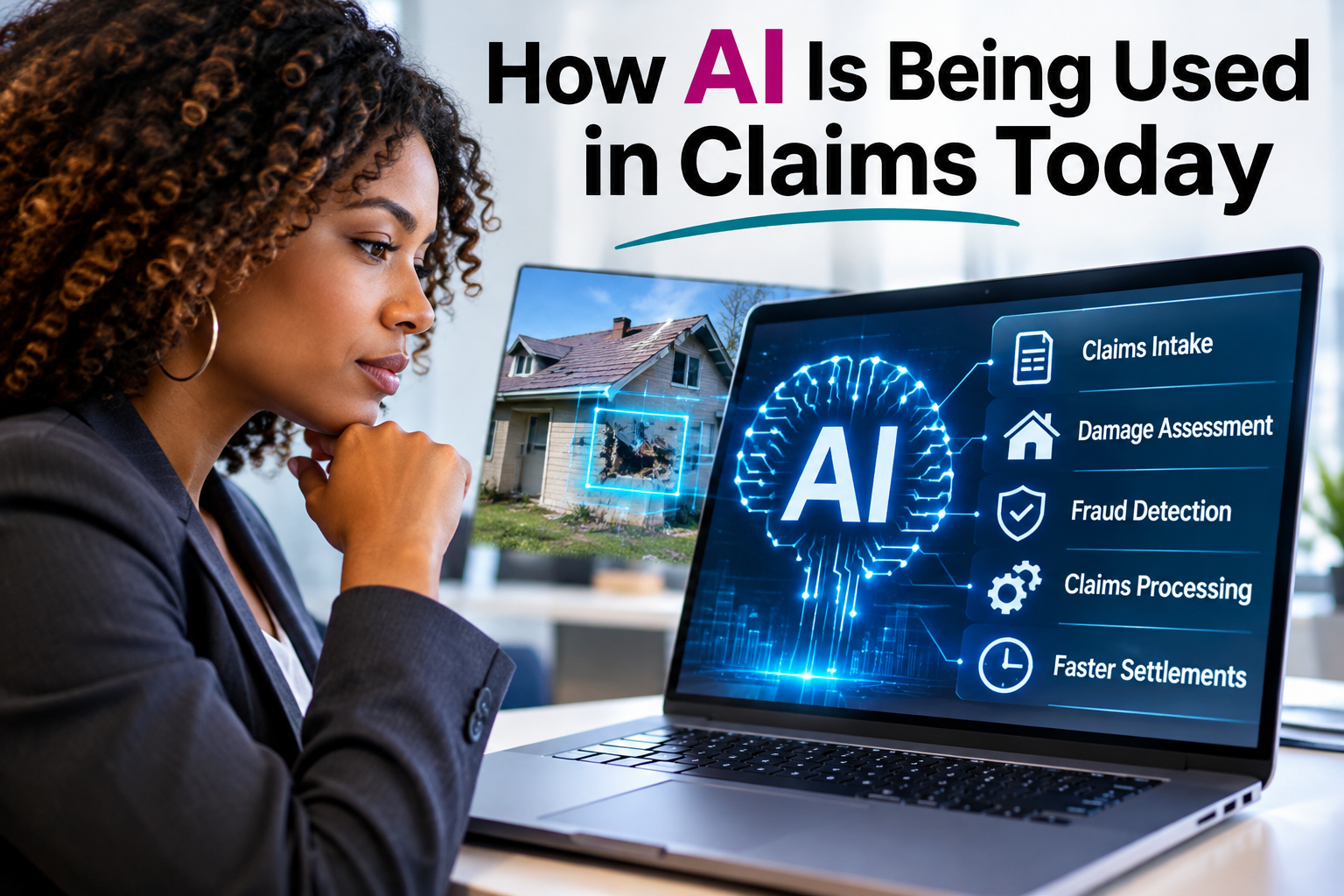
Artificial intelligence is now part of how insurance claims are handled. Many carriers use it to sort new claims, review photos, summarize documents and flag possible fraud. That raises a fair question for anyone in or entering the field: what does AI mean for claims adjusting jobs in 2026? Here is what the data shows, and what it means for your career.
How AI Is Being Used in Claims Today
AI is mostly taking over routine, repeatable tasks, including:
- Claim intake and first notice of loss
- Reviewing photos of low-severity property damage
- First-pass summaries of medical records and documents
- Coverage checks and duplicate or fraud detection
- Routine letters and status updates
As one industry expert put it in Claims Journal, AI does not eliminate jobs so much as it eliminates tasks. Files now often reach the adjuster partly built, and the adjuster’s job shifts to deciding whether the claim makes sense.
What the 2026 Job Numbers Show
The data is mixed, and it is worth knowing both sides:
- Entry-level postings are down. Entry-level claims adjuster job postings have fallen about 50% since early 2024, according to Glassdoor and Indeed research reported by Insurance Business. The same report notes the data does not prove AI is the cause; cost pressures and lower claim volumes also play a role.
- Experienced adjusters are in demand. Senior-level postings remain about 80% above 2017 levels, and claims is still one of insurers’ biggest staffing needs.
- Openings continue every year. The U.S. Bureau of Labor Statistics projects about 21,600 openings each year through 2035 as adjusters retire or change careers, even though it projects overall employment to decline 6% over that decade.
- Pay is solid. The BLS reports a median annual pay of $78,020 for claims adjusters, appraisers, examiners and investigators (May 2025).
What AI Can’t Replace
The parts of the job that matter most are still human:
- Judgment on unusual claims. AI handles typical files well, but complex, unusual losses need an experienced adjuster.
- People skills. Explaining a decision, calming an upset policyholder and negotiating a fair settlement require a person.
- Field work. Catastrophe and field adjusters inspect damage in person, especially after major storms.
- Defending decisions. Adjusters must be able to explain and document their reasoning, including when they override an AI recommendation.
How to Build an AI-Ready Adjuster Career
- Get licensed and stay licensed. A Texas all-lines license and current CE keep you eligible for work across many states.
- Master estimating software. Tools like Xactimate remain core skills employers look for.
- Build experience fast. With fewer entry-level roles, field, catastrophe and independent adjusting work can help you gain the experience employers want.
- Learn to work with AI. Understand what the tools do well, where they fall short, and how to document your own judgment.
- Keep learning. Continuing education keeps you current as technology and regulations change.
Start or Grow Your Career With Claims Adjuster Academy
Claims Adjuster Academy has trained thousands of adjusters since 2016. Explore our Texas all-lines pre-licensing, Xactimate training and Texas CE courses to build the skills that keep you in demand.
Figures are from the sources linked above, as reported in 2025 and 2026.