Desktop Adjusters vs. Field Adjusters: Which Path Is Right for You?
Thinking about a career as an insurance claims adjuster? One of the first choices you will face is whether to work as a desktop adjuster or a field adjuster. Both roles help policyholders recover after a loss, but the day-to-day work, schedule and skills are very different. Here is how they compare, and how to decide which path fits you.
What Is a Desktop Adjuster?
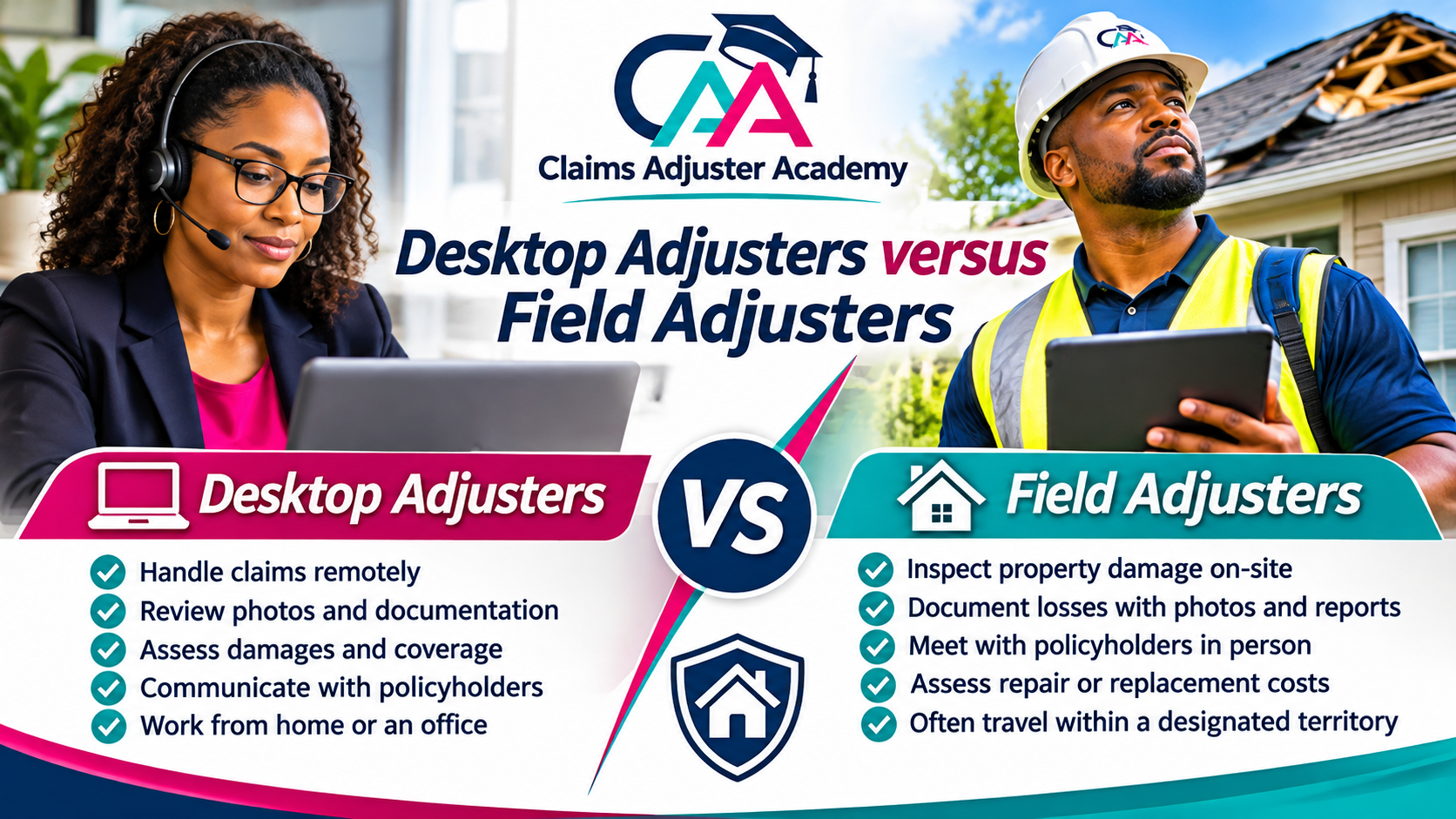
A desktop adjuster, sometimes called an inside or virtual adjuster, handles claims remotely from a home office or company office. Instead of visiting the loss site, a desktop adjuster:
- Reviews photos, videos and documents submitted by policyholders, contractors and field inspectors
- Reviews coverage and assesses damages
- Writes or reviews estimates, often using software such as Xactimate
- Communicates with policyholders, agents and contractors by phone, email or video call
- Works through a steady volume of claims from start to settlement
Desktop adjusting has grown as insurers use virtual inspections, photo-based estimating and AI tools to handle routine claims faster.
What Is a Field Adjuster?
A field adjuster, also called an outside adjuster, goes to the property to see the damage firsthand. A field adjuster typically:
- Inspects homes, roofs, vehicles and businesses on site
- Documents losses with photos, measurements and reports
- Meets with policyholders in person to explain the claims process
- Assesses repair or replacement costs and writes estimates
- Travels within a territory, or nationwide as a catastrophe (CAT) adjuster after major storms
Desktop vs. Field Adjusters at a Glance
| Desktop Adjuster | Field Adjuster | |
|---|---|---|
| Where you work | Home or office | On site at the property |
| Travel | Little or none | Local territory, or nationwide for CAT work |
| Schedule | Usually regular hours | Varies; long days during storm season |
| Key skills | Organization, communication, estimating software | Inspections, roof work, estimating, working independently |
| Best for | People who want stability and work from home | People who like being outdoors and on the move |
Pros and Cons of Each Path
Desktop adjusting
- Pros: work from home, predictable schedule, no climbing roofs, less wear on your vehicle
- Cons: high claim volume, more screen time, less face-to-face contact with policyholders
Field adjusting
- Pros: variety, time outdoors, strong earning potential during busy CAT seasons
- Cons: travel, physical work, irregular hours, time away from home after major storms
How Much Do Claims Adjusters Earn?
According to the U.S. Bureau of Labor Statistics, the median annual pay for claims adjusters, appraisers, examiners and investigators was $78,020 in May 2025. Pay varies by employer, experience, location and claim volume. Independent and catastrophe field adjusters are often paid per claim, so earnings can rise sharply during busy storm seasons.
Which Path Is Right for You?
Ask yourself a few questions:
- Do you want to work from home? Desktop adjusting may be the better fit.
- Do you enjoy travel and hands-on work? Field or CAT adjusting may suit you.
- Are you comfortable on ladders and roofs? Field work often requires it.
- Do you want to try both? Many adjusters start in one role and move to the other as their careers grow.
The Same Foundation for Both
Whichever path you choose, most adjusters need the same foundation: a state adjuster license, strong estimating skills and continuing education to keep the license active. In Texas, an all-lines adjuster license qualifies you for both desktop and field roles, and many other states recognize a Texas license.
Start Your Adjuster Career With Claims Adjuster Academy
Claims Adjuster Academy has trained thousands of adjusters since 2016. Get licensed with our Texas all-lines adjuster pre-licensing course, build your estimating skills with Xactimate training, and keep your license active with our Texas 24-hour CE package.